A Vision That Helped Shape a City
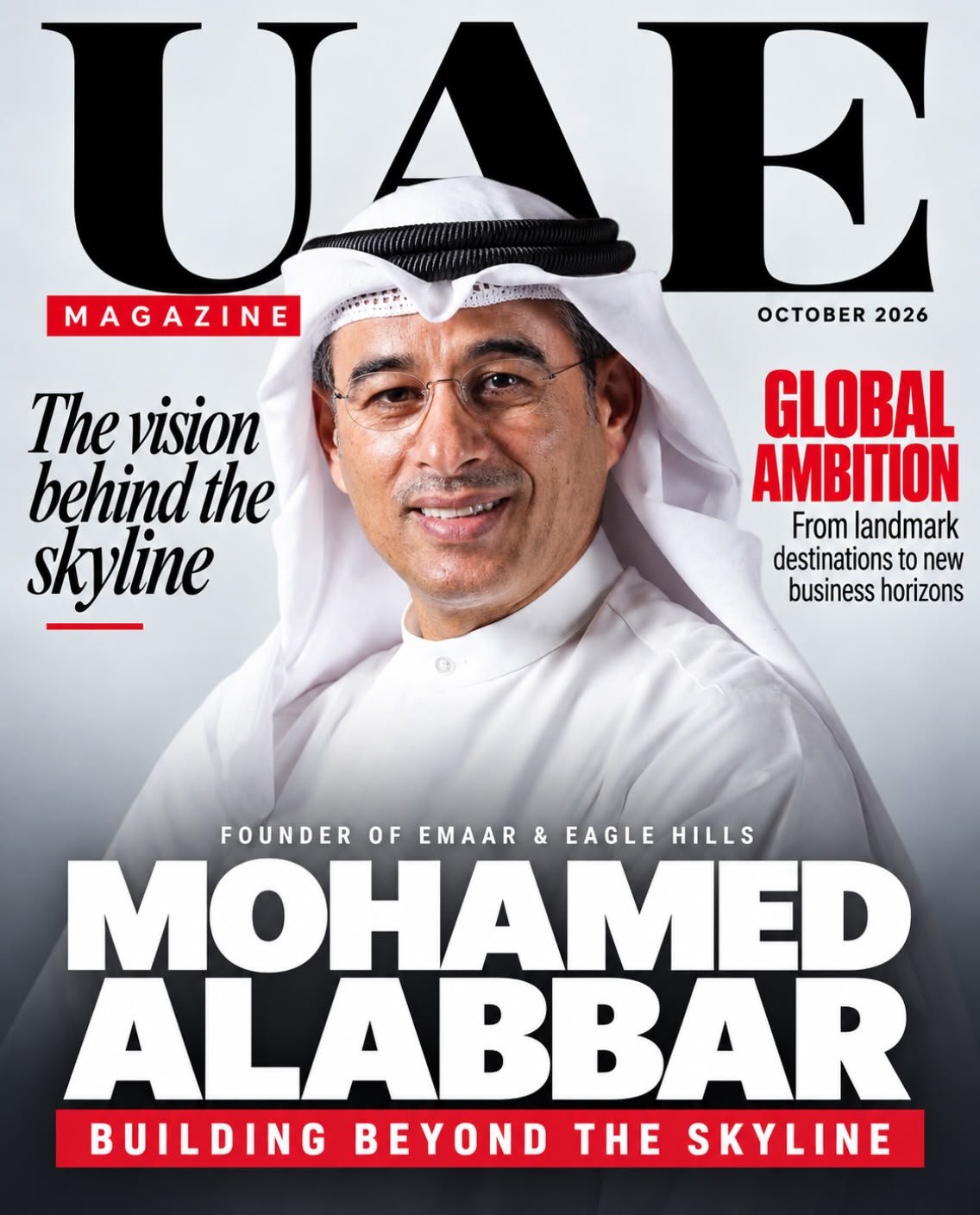
Few business leaders have influenced Dubai’s modern identity as profoundly as Mohamed Alabbar. An entrepreneur known for thinking beyond conventional boundaries, Alabbar has played a significant role in shaping the emirate into a global destination for business, tourism, luxury and investment. Through landmark real estate developments, internationally recognised retail destinations and ventures in the digital economy, he has helped transform ambitious ideas into enterprises with global reach.
His story is not simply about buildings, brands or commercial success. It is about understanding how places evolve, how experiences create lasting value, and how a bold vision can influence the way people live, work, shop and connect with the world.
As the founder and managing director of Emaar Properties, Alabbar has been closely associated with some of Dubai’s most recognisable developments. His wider business interests, including Eagle Hills and noon, demonstrate an entrepreneurial approach that extends beyond property into hospitality, retail, technology and e-commerce. <Cite refs={[“turn148164search0″,”turn148164search2”]}/>
The Foundations of an Entrepreneurial Mindset
Alabbar’s professional journey began with a strong foundation in finance and business administration. He graduated from Seattle University in the United States before returning to the United Arab Emirates, where he gained experience in public-sector development and economic affairs.
One of his early leadership roles was as the founding director-general of Dubai’s Department of Economic Development. This experience provided insight into the forces that support economic growth, encourage investment and create opportunities for businesses to flourish. It also helped shape his understanding of Dubai’s potential to become a major international commercial centre. <Cite refs={[“turn148164search0″,”turn148164search2”]}/>
These early experiences contributed to a business philosophy centred on long-term ambition, strategic planning and the ability to recognise opportunities before they become obvious. Rather than viewing development as a purely commercial activity, Alabbar has consistently pursued projects that combine economic value with a broader vision for the city and its residents.
Emaar Properties: Building a Global Real Estate Legacy
A defining milestone in Alabbar’s career came in 1997 with the establishment of Emaar Properties. The company emerged during a period when Dubai was laying the foundations for a new model of urban development, one designed to attract international investment, residents and visitors.
Under Alabbar’s leadership, Emaar developed a portfolio spanning residential communities, commercial properties, hospitality, retail and entertainment. Its approach helped popularise the idea of integrated destinations where people could live, work, shop and spend their leisure time within thoughtfully planned environments.
Emaar’s growth also reflected Dubai’s wider transformation. As the city expanded its international profile, the company became associated with projects that communicated confidence, ambition and a willingness to compete on a global stage.
The significance of Emaar lies not only in the scale of its developments but also in its contribution to the way Dubai is experienced by residents and international visitors. Its communities and destinations have become part of the emirate’s contemporary identity, reinforcing the connection between real estate, tourism and economic growth. <Cite refs={[“turn148164search0″,”turn148164search7”]}/>
Burj Khalifa: A Landmark Beyond Architecture
Among the most recognisable achievements associated with Emaar is the Burj Khalifa. Rising above Downtown Dubai, the tower has become one of the world’s most familiar architectural landmarks and a powerful symbol of the emirate’s ambition.
Its significance extends beyond its height. The project represents a broader vision of urban development in which architecture, tourism, hospitality, retail and public spaces work together to create a destination with international appeal.
The Burj Khalifa helped place Dubai prominently on the global tourism map, attracting visitors from across the world and reinforcing the city’s reputation for extraordinary engineering and ambitious development.
For Alabbar, projects of this scale illustrate the importance of thinking beyond immediate commercial objectives. A landmark can become part of a city’s identity, influence international perceptions and create opportunities across multiple industries. It can also inspire future generations to imagine what is possible when ambition is supported by investment, expertise and determination.
Dubai Mall: Redefining the Shopping Experience
Another major part of Emaar’s legacy is Dubai Mall, one of the city’s best-known retail and leisure destinations. More than a conventional shopping centre, it brings together retail, dining, entertainment and visitor experiences within a single destination.
Its success reflects a broader shift in consumer expectations. Modern retail increasingly depends on experience as much as on transactions, with visitors seeking environments where shopping is combined with recreation, social interaction and discovery.
Dubai Mall demonstrates how a commercial development can become a destination in its own right. Its position within Downtown Dubai also strengthens the wider district, connecting retail and hospitality with surrounding attractions and residential developments.
The project reflects an important principle in Alabbar’s approach to business: successful developments are not simply constructed; they are designed around how people want to experience them.
Expanding Beyond Dubai
Although Dubai remains central to Alabbar’s business story, his ambitions extend well beyond the emirate. Through Eagle Hills, the Abu Dhabi-based real estate investment and development company he founded, he has pursued projects in international markets, bringing a development model focused on large-scale destinations and integrated communities to a wider geography.
His international activities reflect an understanding that cities around the world are seeking investment, infrastructure, tourism opportunities and developments capable of supporting economic growth. The opportunities differ from market to market, requiring local knowledge, long-term planning and the ability to navigate complex commercial environments.
In October 2026, Reuters reported that Eagle Hills planned to invest approximately $16 billion to $17 billion in two real estate projects in Syria, including developments in Damascus and Latakia. The proposed investment illustrates the scale of Alabbar’s international ambitions, although the delivery and outcomes of major projects depend on local conditions, financing and implementation. <Cite refs={[“turn148164news20”]}/>
This international expansion represents a significant dimension of his business strategy: applying development expertise across different markets while recognising that every city has its own economic, cultural and social context.
noon: Embracing the Digital Economy
Alabbar’s entrepreneurial interests are not limited to physical infrastructure. His involvement in noon reflects an ambition to participate in the rapid growth of digital commerce across the Middle East.
Launched in 2017, noon was established to build a major regional e-commerce platform, connecting consumers with products and services through digital channels. Its development reflects the growing importance of technology, logistics and digital customer experiences in contemporary business. <Cite refs={[“turn148164search8″,”turn148164search0”]}/>
The move into e-commerce demonstrates Alabbar’s willingness to pursue opportunities beyond his established real estate expertise. Digital platforms operate in a different competitive environment, where convenience, speed, technology and customer trust are central to success.
By investing in this sector, he has helped bring a prominent regional business perspective to an industry shaped by rapid technological change and intense international competition.
The wider lesson is that entrepreneurship requires adaptation. Established experience can provide a strong foundation, but long-term relevance depends on recognising emerging trends and responding to changing consumer expectations.
A Diversified Approach to Business
Alabbar’s portfolio extends into additional sectors, including hospitality, food and beverage, finance and technology. His leadership and investment interests include Eagle Hills, Americana Group and Zand, reflecting a business approach that reaches across multiple industries. <Cite refs={[“turn148164search0″,”turn148164search2”]}/>
Diversification creates opportunities to reach new customers, develop complementary businesses and respond to changing economic conditions. It also requires an understanding of different markets, operating models and risks.
Across these ventures, a common theme emerges: the importance of scale, customer experience and long-term commercial potential. Whether the focus is a residential community, a retail destination or a digital platform, the underlying challenge is to create something that people find useful, distinctive and valuable.
Leadership Defined by Ambition and Execution
Alabbar’s career offers a compelling example of how a strong vision can influence business strategy. Yet ambitious ideas alone do not create enduring enterprises. They must be supported by investment, capable teams, operational discipline and the willingness to make decisions in uncertain conditions.
Large-scale real estate projects require years of planning and coordination. International expansion introduces additional challenges, from market differences to regulatory requirements. Digital businesses, meanwhile, must continuously adapt to technological developments and changing customer behaviour.
The ability to operate across these different environments has become an important feature of Alabbar’s business profile. His career illustrates the relationship between ambition and execution: the ability to imagine a destination, build the commercial foundations around it and pursue its development over time.
His journey also reflects Dubai’s own evolution. As the emirate has expanded its global economic role, entrepreneurs and businesses have helped shape its commercial landscape, while the city’s connectivity, infrastructure and international outlook have created opportunities for further growth.
The Future of Development and Innovation
The industries in which Alabbar operates are changing rapidly. Real estate developers face growing expectations around sustainability, technology, community design and quality of life. Retail is being reshaped by digital commerce, while international investment increasingly requires careful assessment of economic and geopolitical conditions.
For established business leaders, the challenge is to preserve the strengths of successful enterprises while preparing them for a different future. This means considering how technology can improve customer experiences, how developments can respond to evolving urban needs and how businesses can remain competitive in a more connected world.
Alabbar’s diverse interests place him at the intersection of several of these changes. His continuing work across property, retail and digital commerce reflects the breadth of opportunities available to businesses prepared to evolve with the markets they serve.
A Legacy Built on Thinking Beyond the Ordinary
Mohamed Alabbar’s influence can be seen in the landmarks that define Dubai’s skyline, the destinations that attract millions of visitors and the businesses seeking to serve consumers across the region and beyond.
His entrepreneurial journey demonstrates how commercial ambition, when combined with strategic thinking and sustained execution, can contribute to the transformation of a city and the growth of enterprises across multiple sectors.
Yet his story is not simply about the scale of individual projects. It is also about the willingness to pursue ideas that extend beyond conventional expectations, enter new markets and explore opportunities in industries undergoing profound change.
From Emaar’s landmark developments to Eagle Hills’ international ambitions and noon’s digital platform, Alabbar’s career reflects a consistent belief in the potential of bold ideas to become meaningful enterprises.
As Dubai continues to evolve and global markets create new opportunities and challenges, his business journey remains closely connected to the wider story of the emirate: a story of transformation, enterprise and the pursuit of what comes next.
Mohamed Alabbar’s legacy is ultimately a reminder that the most enduring visions do more than change a skyline. They influence how people experience a city, how businesses imagine their future and how ambition can help shape the world beyond today’s horizons.
Post Views: 210